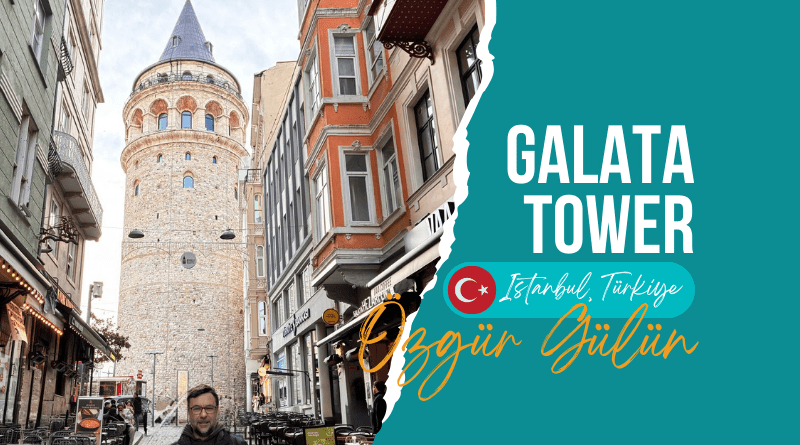
Galata Tower
Article Reading Time

17 August 2026 tarihinde Özgür Gülün updated.
I think the Galata Tower is one of the structures that gives Istanbul its identity with its silhouette. I first went there as a child on a school trip. Those narrow, winding stairs seemed huge to me with my small body, but now, to be honest, they feel a little claustrophobic to me 🙂
Let's take a look at this structure together!
To make it easier to read, I have examined the Galata Tower under the following headings:
-
- History of Galata Tower
- So who were these Genoese?
- Galata Walls
- Important City Gates Connected to the Galata Tower
- Galata Tower during the Ottoman Period
- Hezarfen Ahmet Çelebi
- A familiar name living in Galata: Isaac Rousseau
- Galata Tower in the Republican Period
- Architectural Features of Galata Tower
- Galata Tower in Turkish Literature
- Silk Road Friendship Monument
- Bereketzade Fountain
The History of Galata Tower
In 528 AD, during the reign of Byzantine Emperor Justinian I, the first tower, called "Megalos Pyrgos" (Great Tower), was built to control the entrance to the Golden Horn and to protect the walls of Constantinople from the sea. Remember the chain that stretched between the two sides of the Golden Horn? Well, the northern end of that chain was attached to this tower on the Galata side. However, this first structure was destroyed or lost its function over time.
The tower you see today was built by the Genoese in 1348, and they named it Christea Turris (Tower of Christ). Between the 13th and 15th centuries, Galata was a colony of the Republic of Genoa.
So who were these Genoese?
Their homeland was Genoa, located in northwestern Italy. Between the 11th and 15th centuries, along with Venice, Pisa, and Amalfi, they were one of the most powerful maritime city-states of the Middle Ages. They engaged in trade, seafaring, banking, and colonialism (colonies were structures that established permanent settlements in another geographical area, connecting it to the center and providing economic and administrative control).
Cenevizliler, toprak fethetmekten çok ticaret yollarını kontrol etmeyi hedeflerdi. Kurdukları koloniler, liman şehirleri, ticaret merkezleri, depo ve gümrük merkezleriydi. Galata be sebeple Cenevizlerin askerî bir vilayeti değil, ticaret kolonisi idi.
Genoese colonies had their own administrators called "Podesta," their own courts, their own churches, and their own tax systems, but they maintained economic and political ties with the mother state, Genoa. They were semi-independent within the states they colonized (the Eastern Roman Empire, or Byzantium, and later the Ottoman Empire).
The Genoese did not conquer or seize Galata; they were colonists who established and governed it as a trading colony.
This tower, built by the Genoese, served as the main defensive tower of the Galata city walls during this period. It also functioned as a watchtower, controlling the harbor and trade, and a symbol of prestige. The current stone body, cylindrical form, and main mass are part of the Genoese heritage.
Galata Walls
The Galata Walls were built by the Genoese between the 13th and 15th centuries to protect their trading colony in Galata and to establish a distinct city identity. While earlier Byzantine defensive lines existed, the main backbone of the Galata Walls as we know them today is Genoese construction. Following the Byzantine permission for the Genoese to settle in Galata in 1267, these walls were built in sections during the late 13th and 14th centuries. As the population increased, the walls were also expanded.
Built in 1348, the Galata Tower was integrated with the Galata Walls. It was designed not as a standalone structure, but as a defensive element physically and functionally connected to the city walls. The city walls were constructed adjacent to the lower levels of the Galata Tower. The wall line encircled the tower and interlocked with its body.
I suggest you take a look at the following depiction of Galata, drawn by Matrakçı Nasuh Efendi, one of the most important figures of 16th-century Ottoman miniature art. This miniature, which serves as both a map, a work of art, and a historical document, shows the Galata walls, towers, and settlement in detail. He depicted the seas, ships, green areas, and buildings with a realistic yet perspective-less approach. Matrakçı Nasuh's work is a unique source for understanding the early urban fabric of Istanbul after its conquest. This miniature is considered one of the oldest visual records of the Galata Tower and its surroundings.
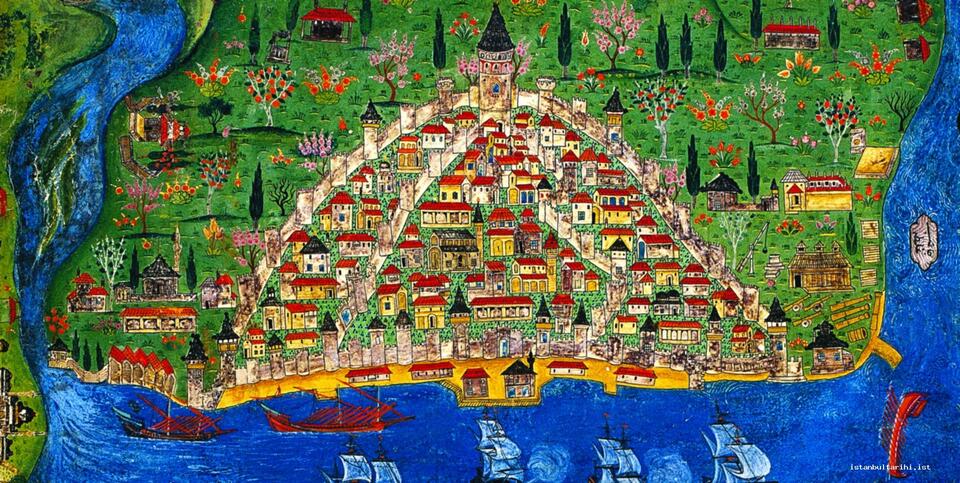
The Galata Tower had a panoramic view of all the gates from above. The gates didn't operate independently; they were under the Tower's watchful eye. In case of danger, the Tower would sound the alarm, the gates would be closed, and the city walls' defenses would be activated.
Important City Gates Connected to the Galata Tower
The doors that were directly connected to or controlled by the tower were as follows:
-
Tower Gate:This is the most strategic gate located right at the foot of the Galata Tower. It is the central gate of the city walls. Military and administrative passages were made through this gate. The Galata Tower was the upper observation point of this gate.
- Mumhane Gate: This gate, connected to the harbor, was close to the Golden Horn coast. It was used for the entry and exit of commercial goods. Of vital importance to the trading colony, this gate also served as a customs point.
- Azapkapı (Porta di San Michele): This gate, which got its name during the Ottoman period, was located on the sea walls and opened to ships coming from the Golden Horn. During the Genoese period, it was used as both a military and commercial gate.
- Lead-Filled Vault Door: This door, where valuable goods were kept, opened to the storage and warehouse area.
During the 19th century, as part of municipal works, the Ottomans demolished the Galata walls, and consequently, the gates disappeared. Today, only place names, elevation differences, and some wall remnants remain.
Galata Tower during the Ottoman Period
Three days after the fall of Constantinople, the Byzantine capital, on May 29, 1453, Galata, a part of the Genoese Republic that was completely defenseless, surrendered to the Ottomans on June 1, 1453. On that day, a Genoese delegation consisting of the Podesta (governor of Galata), Genoese merchants, and clergymen went to the Ottoman headquarters and symbolically handed over the keys. With the covenant given by Sultan Mehmed the Conqueror to the people of Galata, who officially chose to remain neutral during the conquest of Istanbul on June 1, 1453, the lives and property of the inhabitants were protected. The churches were left untouched, and they retained some of their commercial privileges. Thanks to this, a large number of Genoese continued to live in Galata. However, with the collapse of the colonial system over time, Galata became integrated into the Ottoman city.
After passing under Ottoman rule, the Galata Tower continued to exist as a functional structure. In the 15th and 16th centuries, it was used as a shipyard dungeon where prisoners and galley convicts (convicts were forced to row on ships as punishment under a harsh form of imprisonment and forced labor) were held.
During the 18th and 19th centuries, due to the widespread use of wooden structures in Istanbul, the Galata Tower was used as a fire watchtower to counter the threat of major fires. The guards at the top of the Galata Tower, which offered a view of a significant part of Istanbul, would report fires during the day using baskets and at night using lanterns. During this period, the tower itself suffered several fires and damage from earthquakes. Its upper section had to be rebuilt numerous times.
Although it was used as a military depot and observation point in the late 19th century, during the final years of the Ottoman Empire, the tower remains partially empty and neglected.
The tower was damaged again in the Great Galata Fire, which started on June 5, 1875 and lasted approximately 20 hours.
Hezarfen Ahmet Çelebi:
The word Hezarfen is derived from the Persian words Hezar (thousand) and Fen (science, art). In the Ottoman Empire, Hezarfen was a title of praise used to describe someone who "knows a thousand sciences," meaning "a versatile person, proficient in many branches of science and art."
In Ottoman society, the term Çelebi was used for well-educated, urban, and refined men, such as madrasa students, scholars, artists, poets, and those associated with the palace.
Around 1632–1638, it is said that Hezârfen Ahmed Çelebi flew with wings from the Galata Tower to Doğancılar in Üsküdar. This event is even mentioned in Evliya Çelebi's Seyahatname (Book of Travels). However, some historians consider this story "completely legendary," while others say, "It was just an experimental glide, and he didn't fly that far."
The only source we have for information about Hezarfen Ahmet Çelebi is Evliya Çelebi's Seyahatname (Book of Travels). Therefore, there is no other source to cross-reference this information. According to Evliya Çelebi, this esteemed gentleman lived during the reign of Murad IV, was interested in theories of flight, studied winds, air currents, and the flight of birds, and jumped from the Galata Tower using a wing-like device he had made himself, crossing the Bosphorus and landing in Doğancılar Square in Üsküdar. Again, according to Evliya Çelebi, he performed this flight in the presence of the Sultan and received great attention. However, Murad IV considered such knowledgeable individuals dangerous and exiled Çelebi to Algeria. It is rumored that Ahmet Çelebi died in Algeria.
A familiar name living in Galata: Isaac Rousseau
Isaac Rousseau, the father of the famous philosopher Jean-Jacques Rousseau, lived in Galata in the early 18th century (between 1705 and 1711) as a court clockmaker. A Genevan clockmaker, Isaac Rousseau repaired and built clocks for the Ottoman elite and the court. We know that Isaac Rousseau was briefly imprisoned in the Galata Tower due to a debt dispute with a Janissary. The Galata Tower was a secure, central, and militarily controlled structure. Therefore, foreign debtors and individuals who could create diplomatic problems were often held there. Isaac Rousseau was released shortly after this incident, but immediately left Istanbul and returned to Geneva.
His son, Jean-Jacques Rousseau, never visited Ottoman lands. His father passed on his memories and stories of that period to him. In his work "Confessions" (Les Confessions), Jean-Jacques Rousseau refers to the stories he heard from his father. In these accounts, he describes the Ottoman Empire not as an exotic Eastern country, but as a real, harsh, yet functioning system. According to Isaac, the Ottoman Empire was a system where justice was harsh but swift, and state authority was clear and unquestionable. He believed the Ottomans were neither entirely hostile nor entirely tolerant towards foreigners. Perhaps these experiences indirectly influenced the famous philosopher's thoughts on authority, freedom, and the relationship between the individual and the state.
At that time, Galata was a district densely populated by Levantines and European artisans.
What is Levantine?
The word Levant, of French origin, means "the place where the sun rises, the East," while the word Levantine means "Easterner / living in the East." Historically, Levantine is the name given to communities of European origin who were born or lived for a long time in Ottoman lands.
Galata Tower in the Republican Period
Between 1965 and 1967, the Istanbul Municipality carried out a major restoration. This restoration included the addition of an elevator, the creation of an observation deck, and improvements to the interior spaces to make them accessible to visitors. In 1967, the Galata Tower was opened to the public as a museum and observation tower. In 2020, ownership of the tower passed to the Ministry of Culture and Tourism.
Architectural Features of Galata Tower
While the Galata Tower was 60-61 meters high during the Genoese period, it is currently 66.9 meters tall. The purpose of this conical-roofed structure was not only defense and surveillance but also prestige. For the Genoese, what mattered was "being at the highest point," meaning being able to see the Galata city walls and the harbor; there was no consideration for viewing or visitor comfort.
During the Ottoman Empire, in the reign of Mahmud II, the upper section was rebuilt, and a taller and more pointed dome was added. This conical roof is covered with lead.
The Galata Tower, the largest stone structure remaining from the Genoese period in Istanbul, is one of the rare buildings that has transformed from a defensive architectural structure into an urban landmark.
Galata Tower in Turkish Literature
İhsan Oktay Anar – Atlas of Misty Continents
When I think of Galata, the first book that comes to mind is İhsan Oktay Anar's novel, Atlas of Misty Continents, which skillfully blends history, philosophy, and fantasy elements. Set in 17th-century Istanbul, the work presents a multi-layered narrative shaped around dreams, maps, and the search for truth. With its ironic style and profound allusions, it holds a cult place in Turkish literature.
...there was a famous city called Constantinople. It was said that a white gull, flying in the dark, guided the first ships of the Genoese tribe that came there, and that a heretic named Pundus considered this gull to be the Messiah, searched for its nest, found it, and ate the flesh of Jesus according to his beliefs. The ancients said that the Genoese people built a tall tower on the place where this gull's nest was located, and it is said that they chose the great mountain of Bursa as the top of this magnificent structure, which later became known as the Galata Tower.
Ümit Yaşar Oğuzcan and Tragic Melancholy
One of the names who most frequently featured the Galata Tower in his poetry and strengthened its melancholic connotations is Ümit Yaşar Oğuzcan.
In his poem "Galata Tower," written in 1973 in memory of his son Vedat, who committed suicide, Oğuzcan uses the tower as the setting for a tragic event and the grief of losing a father. This poem is the most powerful literary work that, in contrast to the romantic aspect of the Galata Tower, causes it to be associated with despair and death.
It was a bright, sunny summer day.
The world was bright and beautiful.
That day, a man fell from the Galata Tower.
He suddenly let himself fall into the void.
That man was my son.
Silk Road Friendship Monument
Located at the foot of the Galata Tower, this friendship monument was erected on September 1, 2013, to commemorate the historical and cultural ties between Turkey and South Korea, particularly the centuries-long interaction between civilizations established along the Silk Road.
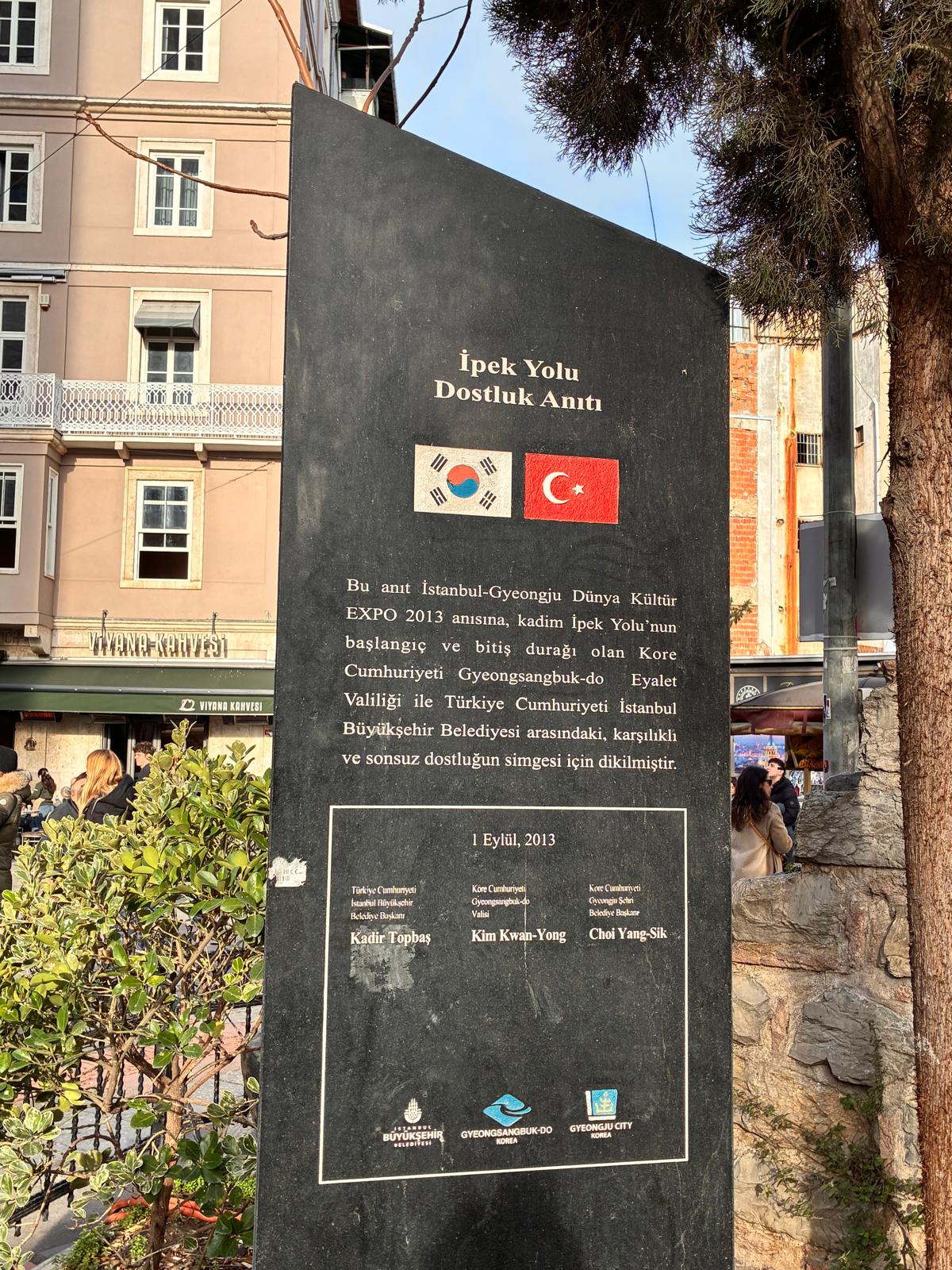
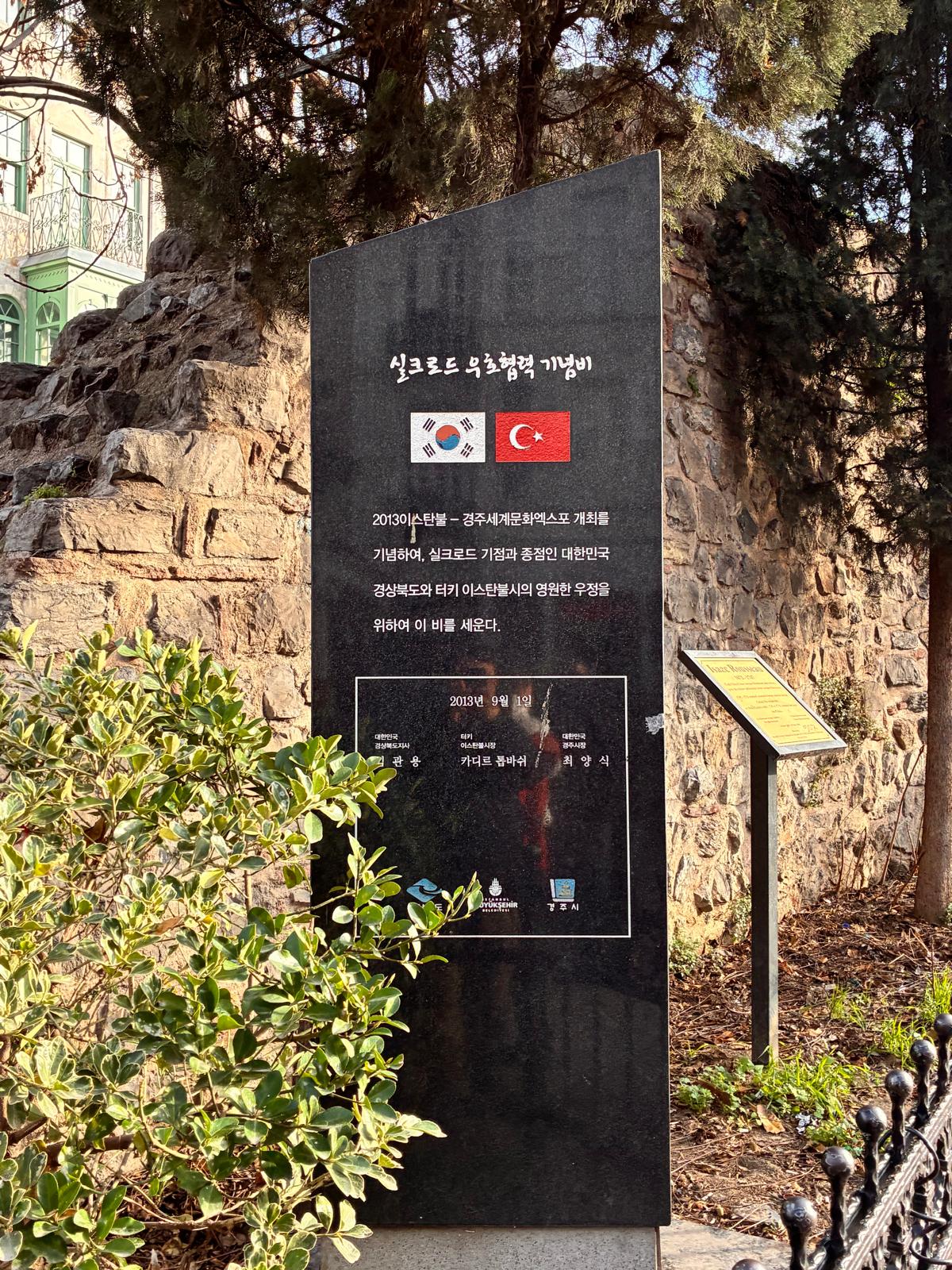
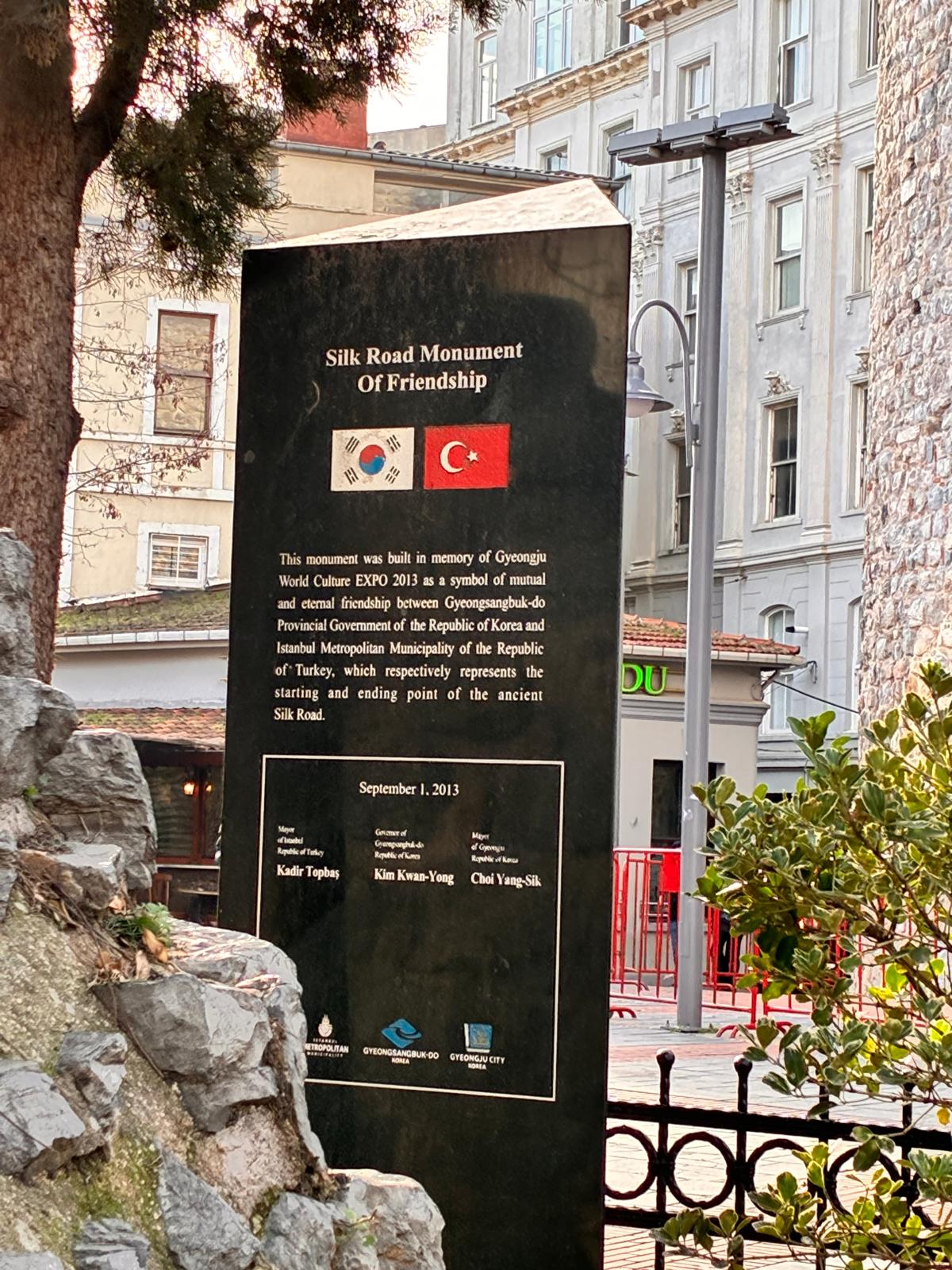
This monument was erected in commemoration of the Istanbul-Gyeongju World Culture EXPO 2013, as a symbol of the mutual and enduring friendship between the Gyeongsangbuk-do Provincial Government of the Republic of Korea, the starting and ending point of the ancient Silk Road, and the Istanbul Metropolitan Municipality of the Republic of Turkey.
The choice of Galata for the monument was also deliberate: Galata has historically been a crucial point where trade routes, merchants, and cultures intersected. Each of the three surfaces of this monument is inscribed in a different language: Turkish, Korean, and English.
Bereketzade Fountain
Originally built by the muezzin of Sultan Mehmed the Conqueror, the structure fell into disrepair over time and was rebuilt in 1732 by Defterdar Mehmed Efendi as a charitable act in honor of Saliha Sultan, the mother of Sultan Mahmud I and one of the most influential female figures in Ottoman history.
The fountain was originally located next to the mosque built by Bereketzade Hacı Ali bin Hasan, the commander of the Galata Tower, and named after him. However, the Bereketzade Mosque, which was a neighbor of the fountain, was completely demolished in the 1940s, and its site was converted into a parking lot. This situation caused the fountain to be left in a derelict area. Having fallen into disrepair and neglect, the fountain was moved to its current location near the Galata Tower in 1957 for preservation purposes.
This situation can be likened to a precious jewel being removed from an old, dilapidated box and placed in a safer, more visible display case; the fountain has thus been saved from destruction, but has been separated from its original architectural surroundings.
The texts mention marble carvings with fruit and flower motifs, rich inscriptions, and aesthetic decorations on the structure. The artistic features of the Bereketzade Fountain are one of the most concrete examples of the Westernization period and the Tulip Era style that the Ottoman Empire began to enter in the 18th century.


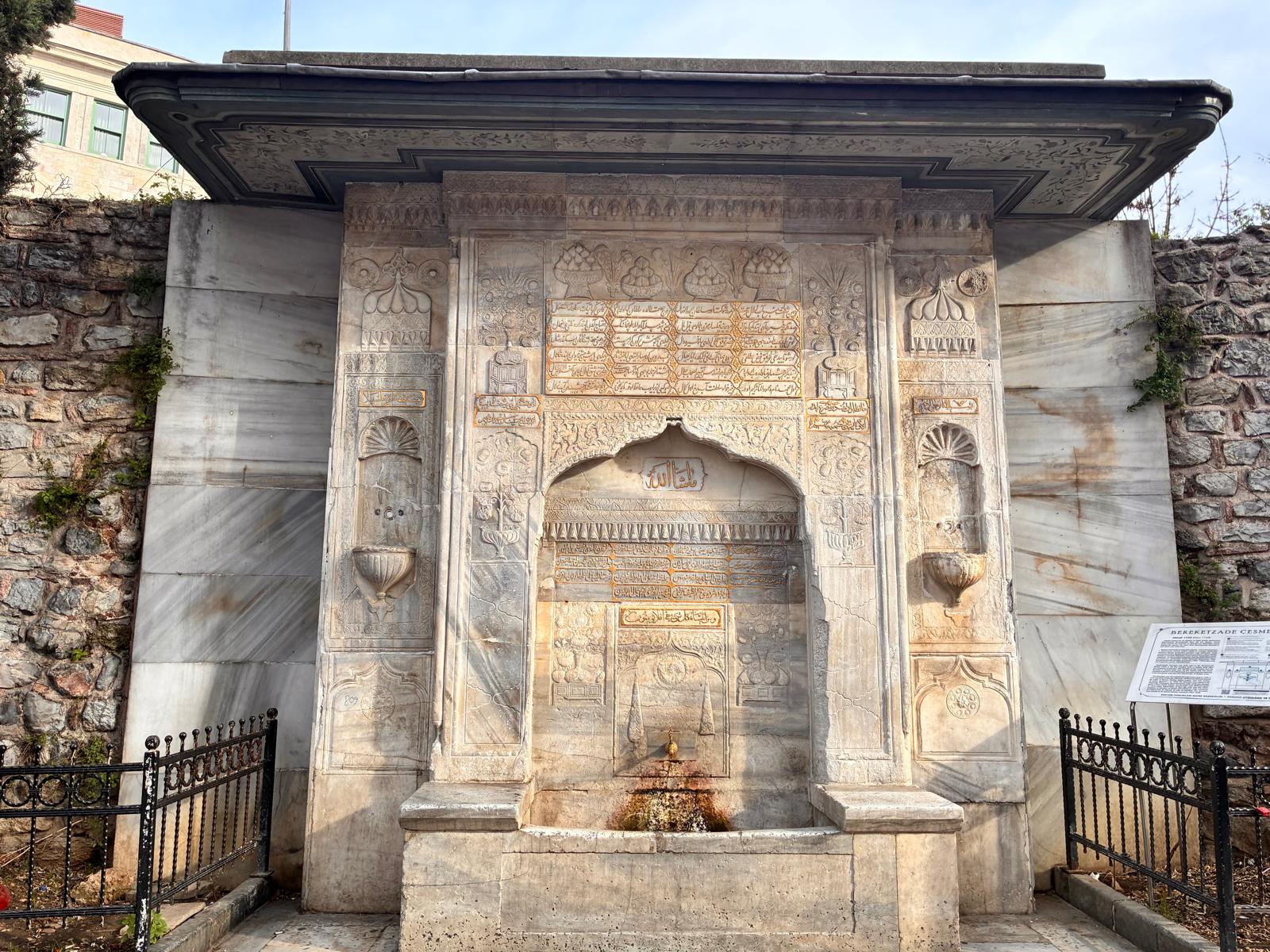
The aesthetic changes of this period are reflected in the architectural details and decorative style of the fountain as follows:
- Transition from Classical Form to Extensive Ornamentation: While classical Ottoman fountains were characterized by simpler ornamentation focused on specific areas, the Bereketzade Fountain's facade marble is completely covered with inscriptions and exquisite examples of stone carving, leaving no empty space. This intensity is the first stage of a new trend (Western style) that accelerated from the 1730s onwards and began to dominate Ottoman art.
- The Use of Naturalistic and Western Motifs: The motifs on the fountain reflect the changing aesthetic tastes of the period with a rich variety:
- Fruit and Flower Compositions: The facade features symmetrically placed reliefs of tulips, roses, and fruits such as figs, pears, and pomegranates in bowls. Detailed approaches, particularly the depiction of figs split in the middle, reflect the naturalist tendencies of the period.
- Oyster Shell Motif: The small taps on the side wings are adorned with crowns shaped like oyster shells. This motif is a typical example of the infiltration of European Baroque and Rococo influences into Ottoman architecture.
- Cypress Trees: The depiction of a pair of cypress trees on either side of the faucet on the mirror stone shows how traditional motifs are interpreted within a new style.
The pursuit of grandeur during the Westernization period is reflected not only in the stonework of the fountain but also in its coloring. Studies have revealed that these reliefs were actually colored with paint and gold gilding. This enhances the visual impact of the fountain and is an approach consistent with the "glossy" aesthetic of the period.
[ays_quiz id=’6′]
READING LIST

Atlas of Misty ContinentsIt is a magical adventure where fantasy and reality intertwine in Ottoman Istanbul.